
Antminer S21 Hyd: What Miners Should Know
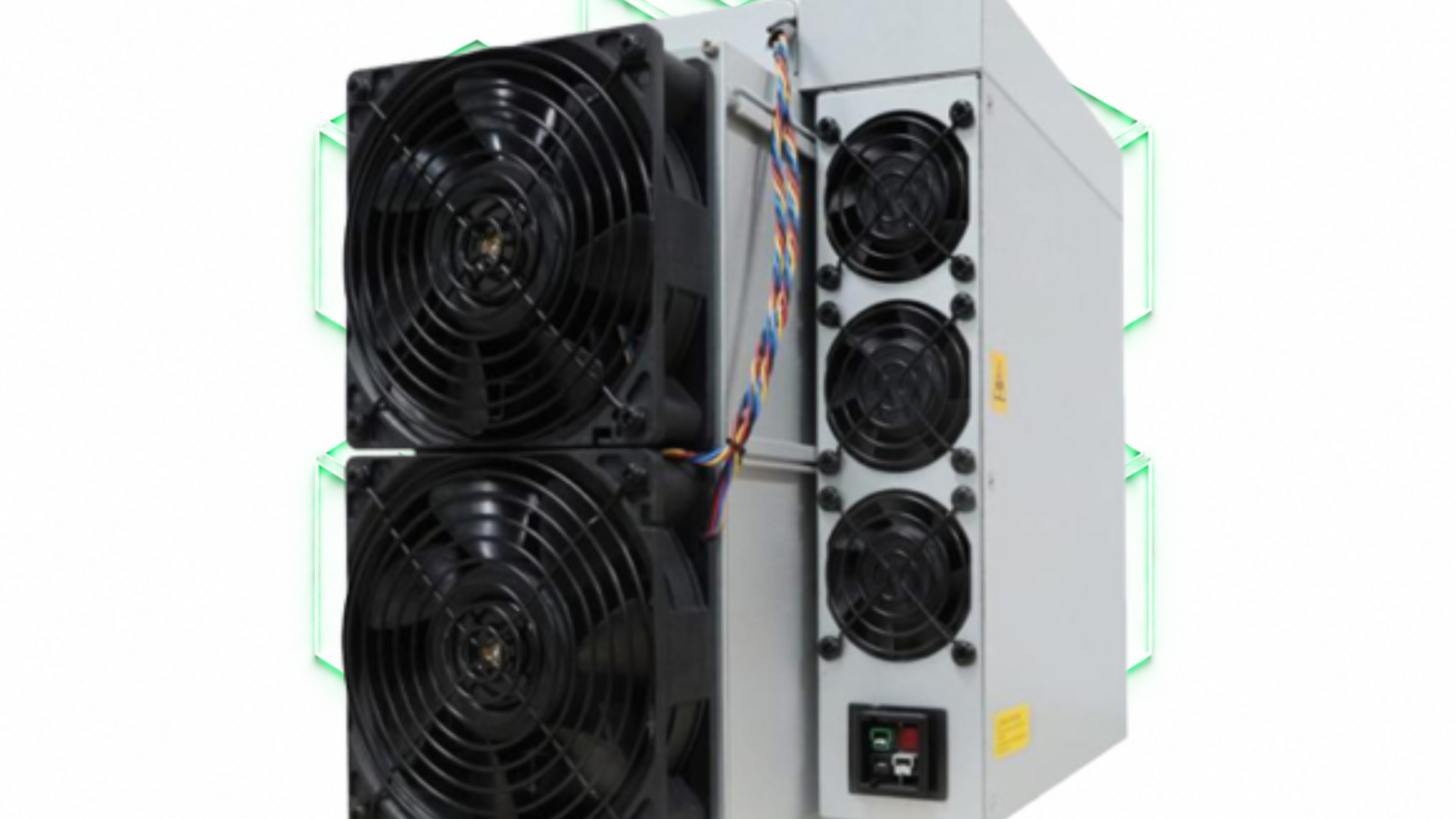
The antminer s21 hyd is Bitmain’s liquid-cooled take on its flagship SHA-256 generation, trading the fans of an air-cooled unit for a coolant loop that moves heat far more efficiently. Miners researching it usually want to know what it gains over air cooling, what specs to verify, and what a deployment actually demands. This guide covers all three in plain terms, then points to the verified hydro unit Coin Web Mining stocks. The framing is educational and sourcing-honest — every numeric claim should be checked against the manufacturer sheet before it drives a purchase.
What is the Antminer S21 Hyd?
“Hyd” is short for hydro — liquid-cooled. Instead of pushing air across heatsinks with fans, the S21 Hyd circulates coolant through the chip cold plates, carrying heat out to an external dry cooler. Because liquid removes heat more effectively than air, the design enables higher hashrate per chassis and dramatically quieter operation than an air-cooled S21. Bitmain publishes the rated hashrate, power, and efficiency per model and bin; confirm those on the spec page for the exact unit, since hydro models ship in several configurations.
For where the liquid line fits in the broader series, the Bitmain Antminer hub maps the air and hydro families, and the S21 Hydro overview walks through the cooling commitment in detail.
What liquid cooling actually buys you
Three advantages drive the hydro design. Density: more hashrate per rack unit, which matters when space is the constraint. Acoustics: no fans means a fraction of the noise, which is decisive for sites near people. Thermal headroom: liquid cooling can sustain higher chip performance without throttling. The trade is infrastructure — a coolant loop and a heat-rejection system the unit cannot run without.
Efficiency in J/TH still rules
Cooling method aside, the number that protects margin over a multi-year hold is efficiency in joules per terahash. The S21 Hyd sits in a competitive J/TH band, but confirm the exact figure for your bin — a higher upfront cost paired with stronger efficiency can beat a cheaper, thirstier unit on total cost of ownership. The S21 efficiency breakdown lays out the gaps across the lineup.
How the cooling loop works
The mechanics are worth understanding before committing. Coolant enters the unit and flows across cold plates pressed against the hashing chips, absorbing their heat. The warmed liquid exits to a manifold, then to a dry cooler — essentially a large radiator with fans — where it sheds the heat to outside air. A pump keeps the loop circulating, and the cooled liquid returns to start again. The whole system runs continuously, and because it is a closed loop, the coolant is reused rather than consumed. The advantage over air is simple physics: liquid carries far more heat per unit volume than air, so it removes heat from the chips faster and more evenly.
The infrastructure a hydro unit requires
An S21 Hyd is not a plug-and-play purchase. It needs a closed coolant loop, a dry cooler or cooling tower to reject heat, manifolds, hoses, and a pump system, plus the electrical supply for the load. For a single-unit home buyer, that supporting equipment can cost as much as the miner and requires expertise to install and maintain. At facility scale the cost amortizes across many units, which is why hydro suits farms more readily than hobbyists. The S21 Hyd 335T guide illustrates what a single unit demands.
Heat reuse and the noise advantage
Two benefits of hydro often go uncounted in a spec comparison. The first is heat reuse: because waste heat travels in a liquid loop, it is far easier to redirect into useful work — heating water, a building, or a greenhouse — than the diffuse hot air an air-cooled unit dumps into a room. For a site that needs heat anyway, that recovered energy offsets part of the power cost. The second is noise. Air-cooled S21 units rely on high-speed fans that produce substantial, sustained noise; a hydro unit moves its heat in liquid and runs dramatically quieter. For deployments near homes, offices, or noise-restricted zones, that acoustic difference can be the deciding factor regardless of the efficiency numbers.
Maintenance: what a liquid system asks of you
A hydro unit trades the simple failure modes of air cooling for the more involved ones of a liquid system. Pumps can fail, lines can develop air locks, fittings can leak, and coolant degrades over time and needs inspection or replacement. None of this is beyond a competent operator, but it requires monitoring — temperature sensors and leak detection near energized electronics are essential, not optional. A buyer should honestly assess whether they can sustain that maintenance routine for years. If the answer is no, an air-cooled S21 XP delivers comparable per-unit economics without the operational overhead.
How to verify the specs
Confirm three numbers together against Bitmain’s page: rated hashrate (TH/s), power (watts), and efficiency (J/TH). A listing missing the efficiency figure is incomplete. Remember that the headline hashrate is the top of a bin band, so the unit you receive may differ — verify the exact configuration. For market reality and what the unit trades for, cross-check asicminervalue; for payback context, mempool.space shows the current network difficulty that drives the economics.
Total cost of ownership for a hydro unit
Evaluating an S21 Hyd on its purchase price alone misses most of the picture. The unit price is one line; the coolant loop, dry cooler, pump, and electrical work are another; ongoing power is usually the largest line of all over a multi-year hold. For a single-unit buyer, the supporting infrastructure can rival the miner’s cost, which is why hydro economics improve sharply with scale — fixed infrastructure spreads across many units at a facility. The honest comparison sums every line over the intended hold and divides by hashrate delivered, then weighs that against an air-cooled S21 XP on the same all-in basis. Often the air unit wins for small deployments on simplicity alone, while hydro pulls ahead where density, noise, or heat reuse carry real value.
How difficulty and price shape the outcome
No hydro purchase should be modeled on static conditions. Bitcoin difficulty adjusts roughly every two weeks and has trended upward as hashrate grows, steadily lowering revenue per terahash, while the BTC price swings independently. A responsible model runs the deployment against a rising-difficulty assumption and a conservative price, then checks that it still clears its all-in cost. mempool.space provides the current difficulty and recent adjustment history to anchor that model. Frame the result as a range rather than a forecast — mining economics shift weekly, and a unit that pencils out today under optimistic inputs may not under a difficulty climb. This caution matters more for hydro than air because the larger upfront commitment needs a longer profitable run to justify.
Should you choose hydro or air?
The decision is about your site. If you have rack space, can install and maintain a coolant loop and dry cooler, need low noise, and run a power rate that rewards the efficiency, the S21 Hyd is a strong fit — and Coin Web Mining stocks the S21 XP+ Hyd within the family. If you’re a single-unit buyer with no plumbing and limited space, the air-cooled S21 XP delivers comparable economics with none of the infrastructure spend. Match the cooling commitment to the site before settling on a model.
A pre-purchase checklist for hydro
Before committing to an S21 Hyd, work through the essentials so the decision rests on facts rather than enthusiasm. Confirm the rated hashrate, wattage, and J/TH from Bitmain’s sheet for the exact bin. Verify your site can both power the unit and reject its heat through a properly sized cooling loop. Price the full infrastructure — pump, dry cooler, manifolds, coolant, monitoring, and rack — alongside the miner itself. Honestly assess whether you can maintain a liquid system reliably for years. Model payback against a rising-difficulty assumption and a conservative price, and confirm it clears with margin. Check whether recovered heat has a real use on site, since that can shift the economics. For buyers who clear those checks at facility scale, the S21 XP+ Hyd earns its place; for single-unit buyers without plumbing, an air-cooled S21 XP usually delivers comparable economics with far less complexity. The decision is ultimately about matching the cooling commitment to the site and the operator’s appetite for maintenance, not about the hardware in isolation. A buyer who is honest about both will land on the right side of the hydro-versus-air question and avoid the costly mistake of buying a liquid-cooled unit they cannot properly run. The S21 Hyd is excellent hardware in the right hands and the right facility; it is simply not the default choice for a single-unit home buyer, who is usually better served by the simpler air-cooled path. Match the machine to the operation, and the technology earns its keep.
References
- Bitmain Antminer S21 Hydro specifications — Bitmain
- S21 Hyd listings and efficiency reference — ASIC Miner Value
- Live Bitcoin difficulty for payback modeling — mempool.space
- ASIC market and hashprice analysis — Hashrate Index
What does Hyd mean on the Antminer S21?
Can I run an S21 Hyd without special equipment?
Is the S21 Hyd more efficient than the air-cooled S21?