
Antminer S21 Specs: The Full Spec Sheet Explained
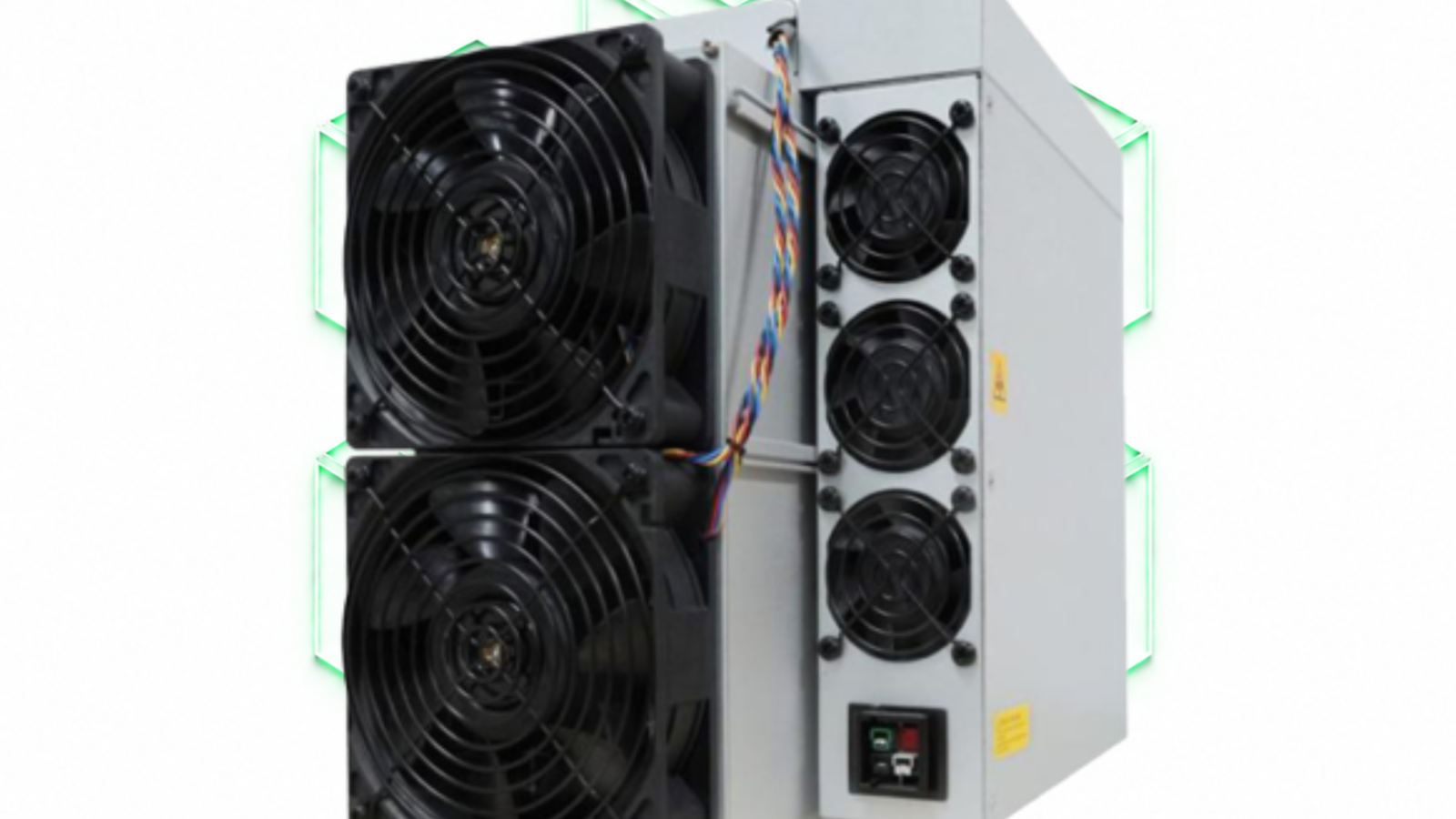
Reading Antminer S21 specs is straightforward once you know which numbers matter and which are noise. The S21 is Bitmain’s current-generation Bitcoin ASIC, and its spec sheet packs hashrate, power, efficiency, voltage, dimensions, and operating conditions into a dense block of figures. This guide walks the full sheet line by line — what each spec means, how variants differ, and which numbers actually decide a purchase. All figures here come from Bitmain’s published specifications and independent listings, framed as reference rather than a promise of stock. Coin Web Mining sells the S21 family as an independent reseller at a small margin over distributor cost.
Antminer S21 specs: the headline numbers
The air-cooled Antminer S21 is rated at roughly 200 TH/s with a wall draw of about 3,500 W, giving an efficiency near 17.5 J/TH per Bitmain’s spec sheet. Those three numbers — hashrate, power, and J/TH — are the ones that determine profitability. Everything else on the sheet is supporting detail.
Hashrate measures hashing output in terahashes per second; higher means a larger share of block rewards. Power is the wall draw in watts. Efficiency, the quotient of the two, is the single most important figure because electricity dominates lifetime cost. At 17.5 J/TH the S21 represents a meaningful step over the legacy S19 family. The hashrate side is detailed further in the Antminer S21 hash rate lineup breakdown.
The full spec sheet, line by line
Beyond the headline trio, a complete S21 spec sheet lists several supporting figures worth understanding.
Voltage and power input
The S21 requires a 220–240 V supply — not a standard household outlet in most regions. Power input range and the bundled or required PSU rating appear here. Plan a dedicated circuit; the unit’s draw exceeds what a typical 120 V residential line can deliver.
Hashboards and chips
The S21 uses three hashboards populated with Bitmain’s latest-generation SHA-256 chips. The spec sheet notes chip count and process node, which underpin the efficiency figure. A healthy unit reaches rated hashrate across all three boards; a failing board drops both hashrate and efficiency.
Cooling and noise
The air-cooled S21 specifies fan count and a noise level near 75 dB — comparable to a vacuum cleaner. Operating temperature range typically runs 5°C to 45°C ambient. Exceeding the upper bound triggers thermal throttling that cuts effective hashrate.
Dimensions and weight
Physical specs — roughly 400 × 195 × 290 mm and around 14 kg for the air-cooled unit — matter for rack planning and shipping. Hydro variants differ in form factor because they integrate cooling plumbing.
How the S21 variants differ on spec
“S21 specs” covers several distinct units. The air-cooled S21 sits near 200 TH/s and 17.5 J/TH. The S21 Hydro raises hashrate using liquid cooling. The S21 XP and XP Hydro push efficiency lower still, into the low-mid teens. Each variant trades cooling complexity for density and efficiency.
The practical implication: spec numbers only compare fairly within the same cooling format. A hydro unit’s higher hashrate comes bundled with the cost and complexity of a cooling loop, which the air-cooled spec sheet never mentions. Buyers should match the variant to their deployment, not just chase the lowest J/TH. The efficiency spread is covered in the S21 efficiency and hashrate explainer.
Which specs actually decide a purchase
For a buyer, three specs carry the most weight. Efficiency (J/TH) governs whether the machine clears its power bill at your electricity rate. Power draw determines circuit and cooling requirements. Hashrate sets gross revenue potential relative to network difficulty.
The rest — dimensions, noise, operating range — are deployment constraints, not profitability drivers. They matter for where and how you run the machine, not whether it earns. A home buyer cares deeply about the 75 dB noise figure; a farm operator with a dedicated building barely notices it. The full Bitmain current-generation lineup, sorted by these specs, lives in the Bitmain Antminer catalog.
Reading specs against real-world performance
Spec-sheet numbers assume near-ideal conditions: roughly 25°C ambient and a healthy PSU. Reality deviates. Hot intake air raises power draw and can throttle hashrate. Firmware tuning — undervolting or overclocking — shifts the machine off its stock 17.5 J/TH. PSU losses add a few percent to wall draw above the rated figure.
Treat the spec sheet as a baseline, not a guarantee. Plan circuit capacity around roughly 3,600–3,700 W rather than the nominal 3,500 W, and budget cooling headroom so the unit holds rated speed in summer. The setup fundamentals are covered in the first ASIC setup guide, which addresses the power and airflow constraints the spec sheet implies but doesn’t spell out.
Firmware, control board, and connectivity specs
Beyond the hardware figures, the S21 spec sheet covers the control board and connectivity. The unit runs an Ethernet connection to the local network and exposes a web dashboard for monitoring hashrate, temperature, and pool status. There is no Wi-Fi; a wired connection is required, which factors into where the machine can sit relative to a router or switch.
The stock firmware handles pool configuration, monitoring, and basic tuning. Some operators replace it with third-party firmware such as BraiinsOS to access finer control over voltage and frequency, shifting the unit along its efficiency curve. The spec sheet’s stated 17.5 J/TH assumes stock firmware at the default operating point; tuning can move it in either direction. Buyers should note that custom firmware may affect warranty terms, a consideration worth confirming before flashing a new unit.
Reading specs across competing manufacturers
The S21 spec sheet is most useful when compared on a like-for-like basis with rival hardware. The figure that travels across brands is efficiency in J/TH, because hashrate and power vary by model but the ratio normalizes them. An S21 at 17.5 J/TH can be set directly against a competing ASIC’s J/TH to judge relative running cost.
Raw hashrate comparisons mislead, because a higher-hashrate machine that draws proportionally more power offers no efficiency advantage. When evaluating any spec sheet, the disciplined approach is to compute J/TH first, then weigh hashrate density and cooling format against the deployment. This is the same logic that places the S21 ahead of the legacy S19 family: not a bigger hashrate number alone, but a better efficiency ratio that compounds over the machine’s working life. Buyers comparing brands should hold every contender to that single normalized metric before weighing secondary factors.
Spec tolerances and what the numbers don’t promise
A spec sheet states nominal figures, not guarantees, and most manufacturers note a tolerance band around the headline hashrate — commonly a few percent in either direction. A unit rated at 200 TH/s might legitimately deliver slightly above or below that, and a figure within the stated tolerance is not a defect. Buyers should know this band exists so a unit reading 196 TH/s isn’t mistaken for faulty.
Power draw carries similar variance. The 3,500 W figure is measured under defined conditions, and real wall draw depends on PSU efficiency, voltage, and ambient temperature. The spec sheet also says nothing about long-term degradation: chips lose a little efficiency over years of operation, and the sheet describes a new unit, not one three years into service. Reading specs with these caveats in mind prevents the disappointment of expecting a fixed number from hardware that operates within ranges.
Using the spec sheet to plan a deployment
The most productive way to read an S21 spec sheet is as a deployment planning document. The power figure sizes the circuit and breaker. The voltage requirement determines whether existing wiring suffices or an electrician is needed. The thermal output, derived from the wattage, sizes the ventilation or cooling. The noise figure decides whether the location is viable near people.
Working through the sheet this way surfaces problems before hardware arrives rather than after. A buyer who maps each spec to a site requirement — circuit capacity, airflow, acoustic isolation, network drop — arrives at a realistic readiness checklist. The units that fail in the field rarely fail because the silicon underperformed; they fail because a spec was read as a marketing figure rather than an engineering constraint. Treating the sheet as the constraint list it actually is turns a successful purchase into a successful deployment, which are not the same thing. A buyer can own a perfectly good S21 and still have it sit idle for weeks because a circuit wasn’t ready or a location turned out too warm to hold rated speed. Those outcomes trace back to specs read as features rather than requirements. The buyers who deploy smoothly are the ones who treated every line on the sheet as a question to answer before the hardware arrived, from breaker size to summer ventilation to the location of the nearest network drop.
References
- Antminer S21 specifications — Bitmain
- S21 hashrate, power and efficiency data — ASIC Miner Value
- Bitcoin network difficulty reference — mempool.space
What are the Antminer S21 specs?
What voltage does the Antminer S21 need?
How do the S21 variants differ on spec?