
Bitmain Antminer Product Evolution: S1 to S21
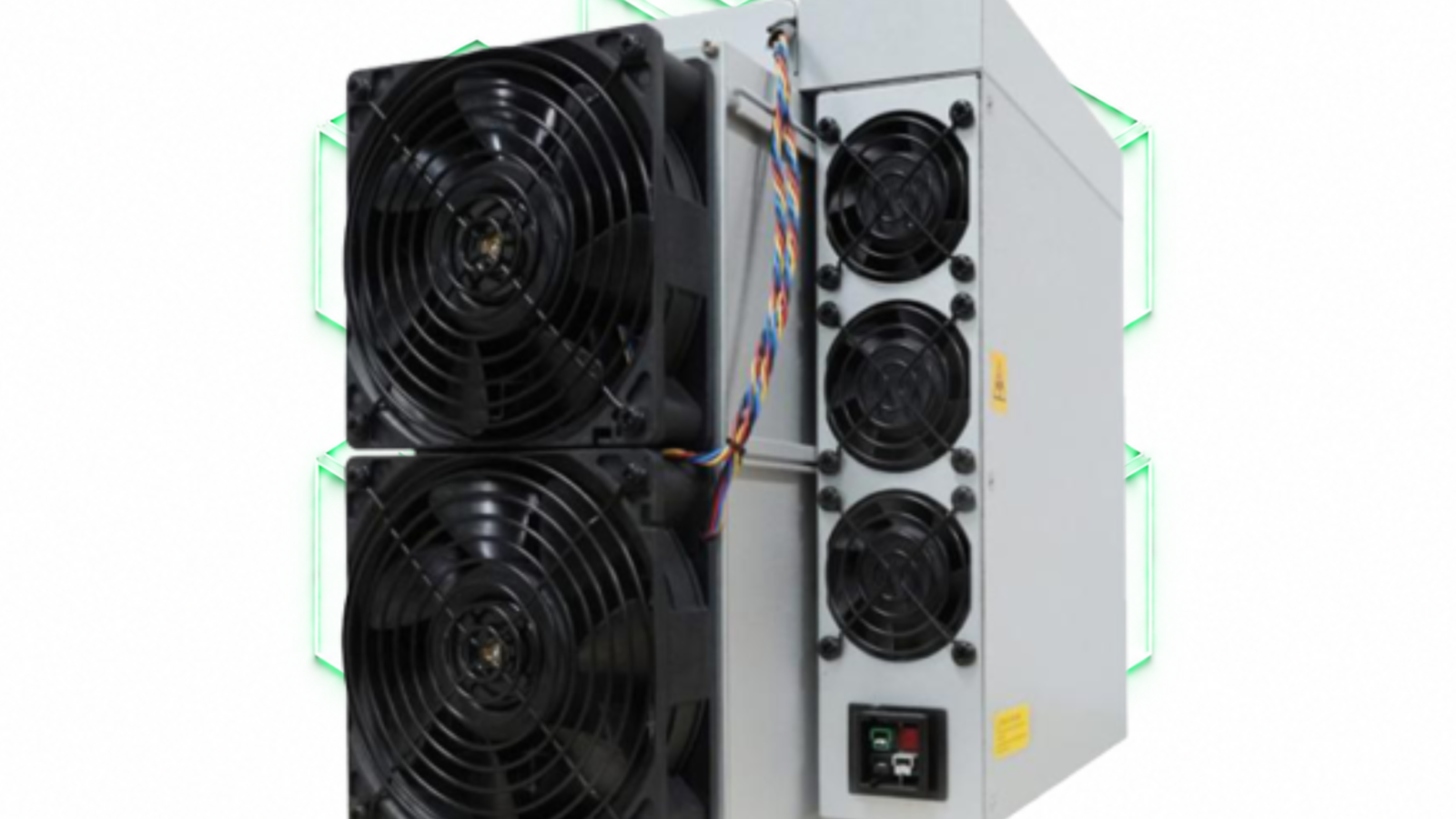
The history of the Bitmain Antminer line is, in many ways, the history of modern bitcoin mining hardware. From the first S1 in 2013 to today’s S21 XP series, the product line charts a relentless march toward better efficiency, with each generation squeezing more terahash from every watt. Tracing the bitmain antminer product evolution shows how ASIC mining went from a hobbyist pursuit to an industrial discipline, and why efficiency, not raw hashrate, became the metric that matters. This is a neutral factual overview of the product line, not a company profile; Coin Web Mining is an independent reseller and not a Bitmain partner.
The Antminer line in one sentence
The Antminer S-series progressed from roughly 2 J/GH on the S1 to around 13.5 J/TH on the S21 XP, an efficiency improvement of several thousand-fold across roughly a decade, achieved through smaller chip process nodes, better chip design, and advanced cooling. Each major model marked a step down in joules per unit of work, and that descending efficiency curve is the through-line connecting every generation. The company history behind the products is covered separately in the Bitmain company profile; this piece focuses on the hardware.
The early era: S1 through S5
Bitmain launched the Antminer S1 in late 2013, delivering about 180 GH/s. It was a milestone simply for being an accessible ASIC at a time when mining was transitioning off GPUs. The S3 and S5 followed in 2014 and 2015, each improving efficiency and hashrate. The S5 reached roughly 1,150 GH/s at markedly better efficiency than the S1, and it became a popular workhorse of its era.
These machines look quaint by modern standards, with hashrates measured in gigahash rather than terahash and efficiency figures that would be hopelessly unprofitable today. Their importance was establishing the template: a self-contained box with hashboards, a controller, and fans, pointed at a pool. That basic architecture persists in current units.
The S7 and S9: the breakout generation
The Antminer S7 arrived in 2015 on a 28nm process at around 4.73 TH/s, the first to cross meaningfully into terahash territory for the series. But it was the S9, launched in 2016, that became legendary. Built on a 16nm process and delivering roughly 14 TH/s at about 0.1 J/GH, the S9 was so durable and efficient for its time that variants remained in service for years, far longer than typical hardware lifespans.
The S9 defined an era. It powered much of the network through the 2017 cycle and beyond, and refurbished S9 units circulated in the secondary market long after newer models launched. Its longevity made it a reference point for what a well-engineered ASIC could endure. For beginners, the lineage from these machines to today’s units is sketched in the explainer on the Antminer S19.
The S17 and S19: scaling efficiency
The S17 series in 2019 pushed onto a 7nm process, lifting hashrate toward 50-plus TH/s while improving efficiency, though early S17 batches were noted for reliability issues that the company worked through. The real consolidation came with the S19 family starting in 2020.
The S19 family
The S19 and its variants, the S19 Pro, S19j Pro, and ultimately the S19 XP, became the dominant workhorses of the early 2020s. The S19 XP reached roughly 140 TH/s at about 21.5 J/TH, a substantial efficiency gain over the base S19. This family powered an enormous share of global hashrate during its run, and refurbished S19-series units remain common on the secondary market, a topic covered in the used ASIC buying guide.
The S21 generation and the cooling split
The current S21 series, introduced from late 2023 onward, marked another efficiency step and, importantly, a diversification of cooling formats. The standard air-cooled S21 and the more efficient S21 XP brought efficiency down toward 13.5 J/TH on the XP, with the XP reaching roughly 270 TH/s. Alongside the air-cooled units, Bitmain expanded hydro and immersion variants.
Hydro and immersion variants
The S21 Hyd, S21 XP+ Hyd, and S21 XP Immersion models reflect a structural shift: at modern power densities, air cooling alone struggles, so liquid cooling enables higher hashrate per unit and better thermal management. Hydro models circulate coolant through the hashboards; immersion units submerge the whole machine in dielectric fluid. The trade-offs between these formats are weighed in the comparison of the S21 immersion versus hydro options. The full current Antminer range is catalogued on the Bitmain Antminer ASIC hub.
What drove the efficiency gains
The descending efficiency curve across the Antminer line did not come from one breakthrough but from several compounding advances. The most important was the steady march to smaller semiconductor process nodes. The early machines used relatively large nodes; the S9 moved to 16nm; the S17 reached 7nm; and subsequent generations pushed to 5nm and beyond. Each shrink packs more transistors into the same area and lets them switch using less energy, directly lowering joules per terahash.
Chip architecture improvements layered on top of process shrinks. Better circuit design, improved power delivery, and refinements in how the hashing cores are laid out all squeezed more useful work from each watt. Cooling advances formed the third pillar. As power density rose, air cooling alone became a limiting factor, and the move into hydro and immersion formats let machines run more chips at higher clocks without overheating, effectively unlocking efficiency that thermal constraints would otherwise have capped.
These three forces, smaller nodes, better architecture, and advanced cooling, reinforced one another. A smaller node generates less heat per unit of work, which in turn makes higher densities thermally feasible, which lets a machine pack more hashrate into the same footprint. The result was a line of products that improved efficiency by orders of magnitude across roughly a decade, a pace few other hardware categories have matched.
What the efficiency curve teaches buyers
The clearest lesson from a decade of Antminer evolution is that efficiency, measured in joules per terahash, is the metric that determines a machine’s working life. An S9 at 0.1 J/GH, which equals 100 J/TH, cannot compete with an S21 XP at 13.5 J/TH on any grid where power is not nearly free. Each generation that lowered J/TH rendered the prior generation marginal, then obsolete, on all but the cheapest electricity.
This is why buyers should treat headline hashrate with caution and focus on efficiency. A high-terahash older machine can burn more power than a newer unit doing similar work, costing more to run every day. The Antminer line’s history is essentially a record of this efficiency descent, and reading it helps buyers understand why newer-generation hardware commands a premium and why older units, however cheap, may never recover their cost on expensive power. Specs cited here should be verified against the current manufacturer spec sheet, since exact figures vary by sub-model and firmware. None of this is investment advice; hardware profitability depends on power cost and network conditions that change continually.
The history also explains the secondary market’s behavior. Each new generation does not just lower prices on the prior flagship; it pushes the oldest machines toward retirement and the scrap or recycling stream. An S9 that mined profitably for years eventually became uneconomic almost everywhere, because the efficiency gap to current hardware grew too wide to overcome on any normal power rate. The same fate awaits today’s flagships in time. Recognizing that every machine sits somewhere on this descending curve, and that its position determines how many profitable years remain, is the most useful frame a buyer can carry from the Antminer line’s history.
The form-factor diversification of the S21 era is itself part of the evolution story and worth weighing as a buyer. Earlier generations offered essentially one cooling option, but the current line spans air, hydro, and immersion to suit different operators. A home miner with a single unit and limited infrastructure leans toward air cooling for simplicity, while a high-density data center extracting maximum hashrate per rack favors hydro or immersion. The same generation of chip can therefore appear in several machines with different cooling and different ideal deployments, which means matching the format to the facility is now part of choosing within the Antminer line, not just choosing between generations.
For buyers, the practical reading is to locate any prospective machine on the curve relative to the current network. A recent unit near the top of the efficiency curve has the longest runway; an older unit deep down it offers low upfront cost but a short remaining life that only very cheap power can justify. The decade of Antminer evolution is, in effect, a map of that trade-off, and it rewards buyers who study it before committing capital.
References
- Antminer S21 XP and S-series specifications — Bitmain
- ASIC efficiency progression data — Hashrate Index
- History of ASIC mining hardware — Bitcoin Magazine
- Coverage of Bitmain hardware launches — CoinDesk
How much has Antminer efficiency improved over time?
Why was the Antminer S9 so significant?
Why did Bitmain add hydro and immersion S21 models?
For current S21-series pricing and lead times, the Bitmain Antminer catalog at Coin Web Mining carries the latest models. Coin Web Mining is an independent reseller, not a Bitmain distributor.