
Canaan Avalon A1628 vs Antminer S21: BTC ASIC Faceoff
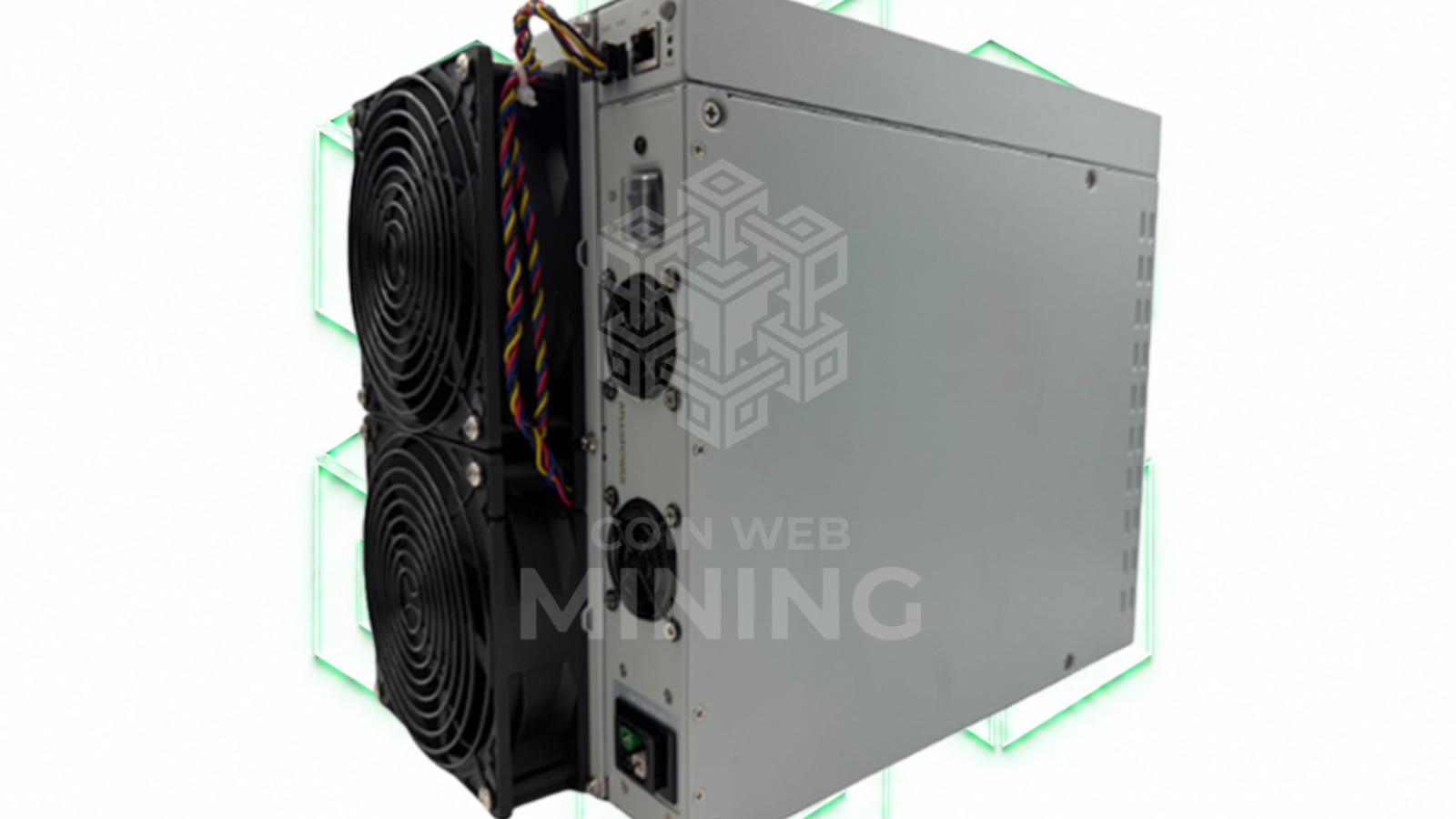
Canaan and Bitmain have shipped competitive SHA-256 hardware for over a decade, and the canaan avalon a1628 vs antminer s21 matchup is one of the more honestly even comparisons in the current generation. The A1628 sits in the same efficiency band as the standard S21, both target the same air-cooled industrial buyer, and both are in Coin Web Mining’s stocked catalog through our supply chain. Picking between them is less about silicon quality (both are competent) and more about firmware ecosystem, parts availability, and where the buyer wants to live in the J/TH curve. This piece walks the spec sheet, the operational realities, and an honest verdict for different buyer profiles.
Canaan Avalon A1628 vs Antminer S21 at a glance
The S21 (standard, non-Pro, non-XP) launched as Bitmain’s mid-2024 mainstream SHA-256 unit. The A1628 is Canaan’s competing entry in the same band, positioned for fleet operators who want a credible alternative to Bitmain dominance. Both ship as air-cooled industrial-form-factor units.
| Spec | Antminer S21 (200T) | Canaan Avalon A1628 |
|---|---|---|
| Hashrate (rated) | ~200 TH/s | ~125 TH/s |
| Wall power (rated) | ~3,500 W | ~2,438 W |
| Efficiency (J/TH) | ~17.5 | ~19.5 |
| MSRP range (new) | ~$3,200–$4,200 | ~$2,200–$3,000 |
| Noise (typical) | ~75 dB | ~75 dB |
| Dimensions (mm) | ~400 × 195 × 290 | ~331 × 195 × 292 |
| Cooling | Air, dual fans | Air, dual fans |
| Algorithm | SHA-256 | SHA-256 |
| CWM stocks? | Yes | Yes |
The S21 has the rated efficiency edge by roughly 2 J/TH, but the A1628 has the price-per-terahash edge at the unit level. Both are honest hardware; the choice rests on what the operator optimizes for.
Why both deserve catalog space
Coin Web Mining stocks both lines because the SHA-256 buyer base is not monolithic. Operators standardizing on Antminer firmware, parts, and rack-management tooling pick the S21. Operators who want diversification away from single-vendor risk, or who prefer Canaan’s firmware approach, pick the A1628. Both choices are defensible and we recommend the unit that fits the buyer rather than pushing a single brand. The Canaan Avalon catalog covers the broader A16-series and Q-series lineup; the Bitmain Antminer catalog covers the full S21 family including XP, Hyd, and XP+ variants.
Efficiency math at the fleet level
For a 50-unit fleet at $0.06/kWh industrial:
50 × S21 = 10,000 TH (10 PH/s). Power: 175 kW. Daily power cost: ~$252. Daily revenue at $50/PH: ~$500. Daily margin: ~$248.
50 × A1628 = 6,250 TH (6.25 PH/s). Power: ~122 kW. Daily power cost: ~$176. Daily revenue at $50/PH: ~$313. Daily margin: ~$137.
The S21 fleet generates more absolute margin, but the A1628 fleet generates more margin per dollar of capex (lower upfront, lower power, lower revenue — better ratio for capital-constrained operators). Hashprice swings; these illustrative figures as of 2026-05-24 should be re-checked against Hashrate Index before commitment.
Operational considerations beyond the spec sheet
Firmware ecosystem
The S21 has the deepest third-party firmware support of any current ASIC: BraiinsOS, Vnish, LuxOS, and a long tail of less-common stacks. The A1628 runs Canaan’s stock firmware, which is competent and stable but doesn’t have the same overclocking/underclocking flexibility. For operators who plan to tune (push hash or pull power on a curtailment program), Bitmain’s third-party ecosystem is a real advantage. For operators who set hash once and forget it, the difference is moot.
Parts and field service
Bitmain operates the densest global service center network in the segment. Canaan’s service footprint is concentrated in East Asia and the US, with thinner coverage in Europe and South America. For multi-region fleets the parts-availability difference matters at month 12–18 when failure rates rise.
Warranty
Both manufacturers offer 180-day warranty on new units from authorized resellers. Extended warranties are available on both lines through some channels; check current terms with the seller, not the manufacturer’s old documentation.
Pool compatibility
Both work with every major SHA-256 pool — Foundry, AntPool, F2Pool, ViaBTC, Braiins, Luxor — over Stratum V1 and Stratum V2 where the pool supports it.
Total cost of ownership scenarios
Scenario A — 20-unit small fleet, $0.07/kWh
S21 fleet: 4,000 TH at 70 kW. Daily power: ~$117. Daily revenue at $50/PH: ~$200. Daily margin: ~$83. Capex (at $3,500/unit): $70,000. Payback: ~28 months.
A1628 fleet: 2,500 TH at 49 kW. Daily power: ~$82. Daily revenue at $50/PH: ~$125. Daily margin: ~$43. Capex (at $2,500/unit): $50,000. Payback: ~38 months.
The S21 wins on payback period at this rate. The A1628 wins on absolute capex barrier-to-entry.
Scenario B — single home/garage unit, $0.10/kWh
Single S21: ~$8.40/day power, ~$10/day revenue, ~$1.60/day margin. Single A1628: ~$5.85/day power, ~$6.25/day revenue, ~$0.40/day margin. At retail rates the S21’s higher hashrate gives it slightly more cushion, but both are marginal — neither is a strong play at $0.10/kWh, which is consistent with the broader picture that home SHA-256 mining requires sub-$0.08/kWh or a non-cash motivation (heat recovery, network support, learning).
Where each makes sense
Pick the Antminer S21 if:
Maximum efficiency per unit matters more than capex constraint. The operator already runs Antminer tooling and parts inventory. The fleet is sized for 100+ units where third-party firmware tuning compounds. Multi-region deployment needs Bitmain’s wider service footprint. Plans include eventually moving to the S21 XP or hydro variants where vendor consistency pays off.
Pick the Canaan Avalon A1628 if:
Capex per unit is the tighter constraint than efficiency-per-unit. The operator wants vendor diversification (reducing single-vendor supply-chain risk). The buyer is new to mining and Canaan’s straightforward firmware feels more approachable. The deployment is concentrated in a single region where Canaan’s service network is adequate. The fleet sits in the 20–100 unit band where modest efficiency tradeoffs don’t compound into seven figures.
The honest catalog disclosure
Coin Web Mining is an independent reseller working at 1–3% margin over distributor cost (typically Jingle Mining), not an authorized partner of Canaan or Bitmain. Both units are in our stocked catalog at standard reseller pricing. Buyers cross-referencing our quote against manufacturer direct or other Western resellers should expect to find similar numbers — we don’t undercut the manufacturer floor, and we don’t claim exclusive pricing we don’t have. For first-time buyers, the how to choose your first miner guide walks through the decision framework that drives between these two units.
Vendor-diversification argument
A point worth flagging explicitly: large operators running multi-thousand-unit fleets often deliberately split between Bitmain and Canaan (and historically MicroBT) to reduce single-vendor risk. Supply chain disruptions, firmware quality regressions, and bulk-pricing leverage all argue for at least some Canaan inventory in any non-trivial fleet. The A1628 fits that role even when the S21 might win on a pure spec comparison.
This same logic applies in reverse: an A1628-heavy fleet benefits from an S21 minority position. Coin Web Mining can source both through the same channel, which simplifies multi-vendor procurement for buyers who want it.
When to upgrade vs hold
Operators running prior-generation units (S19 Pro, A1366) face the upgrade question at different thresholds. At $0.06/kWh industrial, the S21 upgrade typically pencils when legacy J/TH exceeds 28. The A1628 upgrade pencils at slightly lower legacy efficiency thresholds because its capex barrier is lower. For both, the total cost of ownership guide covers the four-year amortization model that drives upgrade timing.
Stratum protocol and pool integration depth
Both units speak Stratum V1 universally and increasingly speak Stratum V2 as pool support expands. Stratum V2 brings meaningful improvements — encrypted communications, job-template negotiation, and better hashrate-stealing resistance — that matter for security-conscious operators. The Antminer S21’s third-party firmware support means BraiinsOS-based Stratum V2 is fully production-ready on Bitmain hardware today. The A1628’s Stratum V2 support depends on Canaan’s stock firmware roadmap, which has been steady but more conservative than the third-party Bitmain ecosystem.
For operators routing through Luxor, Braiins, or other Stratum V2-capable pools, this matters. For operators on Foundry, AntPool, or other V1-primary pools, it doesn’t yet. The protocol-upgrade pressure is real but bounded; both units will be production-ready under V2 within the units’ useful lives.
Canaan corporate context that matters
Canaan is a publicly traded company (NASDAQ: CAN) with regular financial disclosures, which is unusual in the ASIC manufacturer space. That public status creates a transparency layer that doesn’t exist for privately-held competitors — buyers can review quarterly hashrate sales numbers, regional revenue breakdowns, and inventory positions in SEC filings. For risk-management-conscious procurement teams, that visibility has value.
Bitmain operates privately and provides less financial transparency, though the company is the dominant force in the ASIC market and the operational continuity risk is genuinely low. Both companies have shipped reliably for over a decade; neither faces serious solvency questions in the current market.
For broader Canaan context including the company’s product roadmap and the Q-series alternative to the A16-series, see the Canaan Avalon buyer’s guide 2026.
The Avalon Q and home-friendly Canaan alternative
Worth noting for buyers landing on this page who want a home-suitable Canaan unit: the Avalon Q is Canaan’s quiet, low-power offering aimed at home miners and small operators. It’s not directly comparable to the A1628 or S21 (much lower hashrate, much lower wall power) but it sits in a different segment that the A16-series intentionally doesn’t address. The Avalon Q vs Mini3 showdown covers that home-miner decision separately for buyers whose actual question is “which quiet Bitcoin miner for my apartment” rather than “A1628 vs S21.”
For the broader picture of where Canaan competes in 2026, the Canaan Avalon buyer’s guide 2026 walks through each model family. The takeaway for fleet buyers: A1628 is the workhorse industrial unit; Avalon Q serves a different market entirely.
Realistic hashrate at scale — derating considerations
Both manufacturers publish rated hashrate at specific operating conditions: ambient temperature in a defined range, stable wall voltage, fresh firmware, and clean inlet air. Real deployments rarely match all four. Operators should plan for 95–98% of rated hash as the sustained working number, not 100%. The S21 at 200 TH rated typically delivers 190–196 TH sustained; the A1628 at 125 TH typically delivers 119–123 TH sustained.
That derating affects scenario calculations. A 50-unit S21 fleet sized at 10,000 TH rated will more realistically produce 9,500–9,800 TH sustained, which translates to 2–5% lower revenue than rated-spec calculations suggest. The same proportional derating applies to the A1628. Operators planning capacity should size capex against realistic-sustained hash, not rated-peak figures.
Firmware tuning can claw back some performance, push it past rated, or trade hashrate for efficiency. The S21’s deeper third-party firmware support means more tuning options; the A1628’s stock firmware is more uniform out-of-box but less flexible.
Verdict — buyer-segment recommendation
For the median buyer sizing a 20–100 unit air-cooled SHA-256 fleet at industrial power rates, the Antminer S21 is the slightly stronger pick: better J/TH, deeper firmware ecosystem, wider parts network. The premium over the A1628 typically pays back within 24–30 months at $0.05–$0.07/kWh. For capex-constrained operators, vendor-diversification buyers, or first-time fleet operators who value Canaan’s firmware simplicity, the A1628 is a fully credible alternative — not a fallback. Coin Web Mining stocks both because both deserve buyers; the wrong choice here is over-optimizing for the wrong variable, not picking the cheaper-looking spec sheet.
References
- Canaan Avalon A1628 product page — Canaan
- Bitmain Antminer S21 specifications — Bitmain
- A1628 and S21 efficiency listings — ASIC Miner Value
- SHA-256 hashprice and network economics — Hashrate Index
Is the Canaan A1628 actually as reliable as an Antminer?
Can the same operator run both Antminer and Avalon in one fleet?
Which has better resale value after three years?
Does Coin Web Mining offer bulk pricing on either line?
For live pricing on either the Antminer S21 or Canaan Avalon A1628, the Coin Web Mining catalog shows current availability — or start a bulk quote for fleet orders.