
Three-Phase Power for Mining Farms: A Sizing Guide
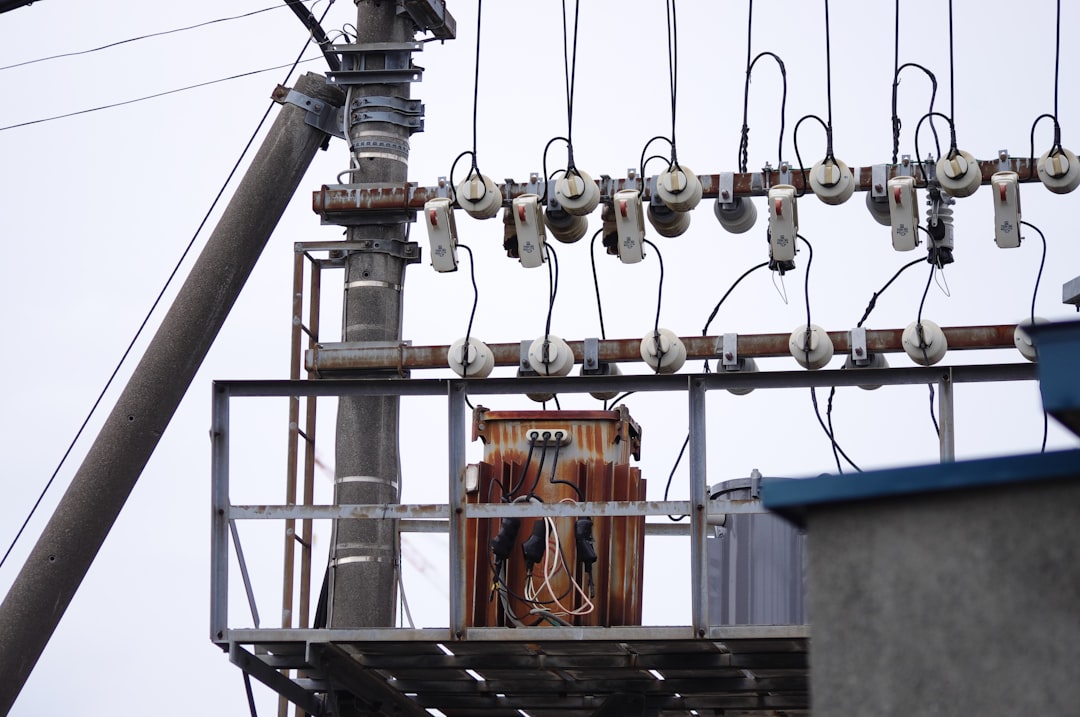
Past about ten ASICs, single-phase 240 V starts to feel inefficient. Cable runs get fat, sub-panels get crowded, and the load imbalance across the two hot legs gets harder to manage. Three-phase power solves all three problems by spreading the load across three conductors and three legs, cutting copper cost per kilowatt and giving the farm a much cleaner path to scale. This guide covers three-phase power mining farm fundamentals — when the switch makes sense, the difference between 208 V and 480 V, transformer options, and how PDU choices shake out at the rack level.
When does three-phase make sense for a mining farm?
The rough breakeven sits at around ten 3.5 kW ASICs — roughly 35 kW continuous, or 145 A on a single-phase 240 V service. At that scale, the conductor sizing for a single-phase feeder gets impractical (a 200 A feeder needs #2/0 copper or larger), and the panel slot count starts crowding even a 200 A sub-panel. Three-phase 208 V spreads the same 35 kW across three legs at roughly 97 A per phase, which fits a much smaller feeder and a 100 A three-phase panel comfortably.
Operators with utility-side flexibility also pay less per kWh on three-phase commercial service in many U.S. states than on single-phase residential rates. The U.S. Energy Information Administration publishes commercial-versus-residential rate differentials by state, and the gap is often 2–4 cents per kWh in favor of commercial service — material money at farm scale. Operators planning future expansion above 100 kW should skip single-phase entirely and start with a three-phase service from the utility.
208 V vs 480 V three-phase: which to choose
Three-phase comes in two practical voltages for mining: 208 V (a “wye” configuration off a 120/208 V service) and 480 V (a “wye” configuration off a 277/480 V service). 208 V is the standard for small commercial buildings — strip malls, small warehouses — and is what most ASICs accept directly via their built-in PSUs, which are typically rated for the 200–240 V range. 480 V requires a step-down transformer to feed the ASIC PSUs, adding capital cost and conversion losses but reducing conductor size dramatically for long farm-floor runs.
The rule of thumb operators use: under 500 kW, 208 V usually wins on simplicity. Above 500 kW, 480 V wins because the conductor savings on the farm-floor distribution recoup the transformer cost in months. Hyperscale farms in the 5 MW+ range run 480 V or even higher (medium-voltage 4,160 V with on-site step-down) because the copper cost at 208 V becomes prohibitive. Most home and small-farm operators stay at 208 V; reading the $100,000 mining farm starter plan gives a sense of where the line typically falls.
Transformer considerations
If the utility delivers 480 V and the ASICs need 208 V or 240 V, a step-down transformer sits between them. Dry-type transformers are the standard for indoor installations — they don’t have mineral oil and don’t require containment. Ratings are specified in kVA (kilovolt-amperes), and the transformer is sized at roughly 125 percent of the continuous load to leave headroom for inrush and to keep windings cool.
A 100 kW continuous load on a 480 V primary feeding a 208 V secondary needs a transformer rated at 125 kVA or larger. Standard sizes step at 75, 112.5, 150, 225, 300, and 500 kVA. Transformers have efficiency losses — typically 1–3 percent at full load — which adds to the operating cost and the heat budget for the room. Operators should add transformer losses to the total cooling load when sizing HVAC, which is covered in the hydro vs air cooling tradeoff write-up.
Three-phase panel and PDU layout
A three-phase panel hosts three-pole breakers for three-phase loads and single-pole breakers for single-phase 120 V loads pulled off any one leg. ASICs that want 208 V can be wired single-phase off any two legs, which is how most farms feed their racks: a three-phase 100 A panel delivers 30+ single-phase 208 V branch circuits, each feeding one ASIC. Balancing the load across the three legs matters — an unbalanced load wastes utility capacity and can trip the main breaker before any individual leg reaches its rating.
Rack-level PDUs are where three-phase shines. A three-phase rack PDU plugs into a single three-phase receptacle (typically NEMA L21-30, L21-60, or IEC 60309 connectors) and presents 20+ C13 or C19 outlets across the three legs. The PDU rotates the leg assignment outlet-by-outlet, automatically balancing the load when the rack is populated evenly. The ASIC PDU recommendations cover specific models and the rack-level math.
Utility coordination and what the install actually involves
Bringing three-phase to a site that does not currently have it is a utility-coordinated project, not a homeowner-electrician project. The utility surveys the existing service, designs the new transformer and meter base, and quotes the upgrade. Costs vary wildly: an existing commercial building on a street with three-phase distribution may be a $2,000–$10,000 service upgrade; a residential property at the end of a single-phase rural line may require a quarter-mile of new distribution line and run $30,000+. The utility cost is usually disclosed only after a site survey.
Operators evaluating sites for a mining farm should make three-phase availability a top-three diligence item, alongside electricity rate and zoning. State guides like the Tennessee operator overview and the North Dakota operator overview touch on utility-rate ranges that drive site selection.
Load balancing and harmonic considerations
Switching power supplies — which is what every ASIC PSU is — generate harmonic currents that propagate back through the three-phase service. At hyperscale, these harmonics can cause neutral overheating on wye-configured services and create power-factor problems that draw utility penalties. At small farm scale (under 200 kW), harmonics are usually a non-issue because the load mix and the building’s transformer absorb them.
Operators running 500 kW+ on a single transformer should specify a K-rated transformer (K-4 or K-13) sized for nonlinear loads, and may need harmonic filtering at the panel. This is squarely commercial-electrical-engineering territory and not a DIY job. The utility will sometimes mandate harmonic mitigation as a condition of service for large mining loads.
Cost comparison: single-phase vs three-phase at farm scale
For a 30-unit farm (105 kW continuous), single-phase 240 V would require a 600 A service or two 300 A services, with three or four sub-panels and very fat copper feeders. Total electrical install cost in North America for this scale, single-phase, lands roughly $25,000 to $50,000 depending on cable lengths and panel placement. The same 30-unit farm on three-phase 208 V uses a single 400 A three-phase service, one or two three-phase panels, and runs roughly $15,000 to $30,000 installed — plus the utility upgrade if three-phase isn’t already at the site.
The capital saved on copper and panel count typically pays for the three-phase utility upgrade within the first eighteen months at farm scale. Operators evaluating whether bitcoin mining is profitable at their target site should pull the utility quote for three-phase as part of the pro forma — not as an afterthought.
Hardware compatibility and rack sizing
Most modern ASICs from Bitmain, Canaan, and Microbt accept any voltage in the 200–240 V range, which means they work natively off three-phase 208 V without modification. Hydro and immersion variants follow the same input spec for their PSUs even though the cooling differs. The Bitmain Antminer catalog publishes PSU input ranges on each product page; the Canaan Avalon catalog publishes the same data.
Rack sizing for three-phase farms typically targets 20–24 units per rack on three-phase 60 A or 100 A PDUs, which delivers roughly 70–100 kW per rack. Aisle layout, containment, and density tradeoffs become the next planning problem — those are covered in the hot aisle vs cold aisle write-up.
One operational warning specific to three-phase farms: a balanced load across all three phases is required to avoid tripping the upstream protection, and ASICs drawing from single-phase PDUs branching off a three-phase main can drift out of balance as units fail or are taken offline. Most large operators monitor per-phase current continuously and rebalance the load monthly. A small farm can get away with a spot-check during commissioning; a 50-rack farm cannot.
Operators sizing the hardware to go behind a three-phase deployment can review the Coin Web Mining catalog for current-generation Bitmain and Canaan units, all of which publish per-unit wall-power figures that feed directly into the load-balance plan.
Finally, a cost note: three-phase service from the utility is often billed under a demand-charge tariff rather than a simple energy tariff. Demand charges price the peak kilowatt draw across a billing period and can dominate the bill for a mining load that runs at constant peak. Operators sizing a new three-phase service should obtain the utility’s specific tariff sheet before signing — a site that looks cheap on the headline per-kWh rate can be substantially more expensive once demand charges are included.
References
- EIA commercial and industrial electricity rates — EIA.gov
- IEA Electricity report — IEA.org
- Bitmain ASIC PSU input specifications — Bitmain.com
- Hashrate Index farm-economics analysis — HashrateIndex.com
When should a mining farm switch to three-phase power?
Can ASICs run directly on three-phase 208 V?
How expensive is a utility upgrade to three-phase?
For sourcing the ASICs that will sit behind the three-phase service, the Coin Web Mining catalog publishes PSU input ranges and wall-power figures for every current-generation model. Bulk orders qualify for quoted pricing.