
ASIC Surge Protection Guide: Shielding Your Fleet
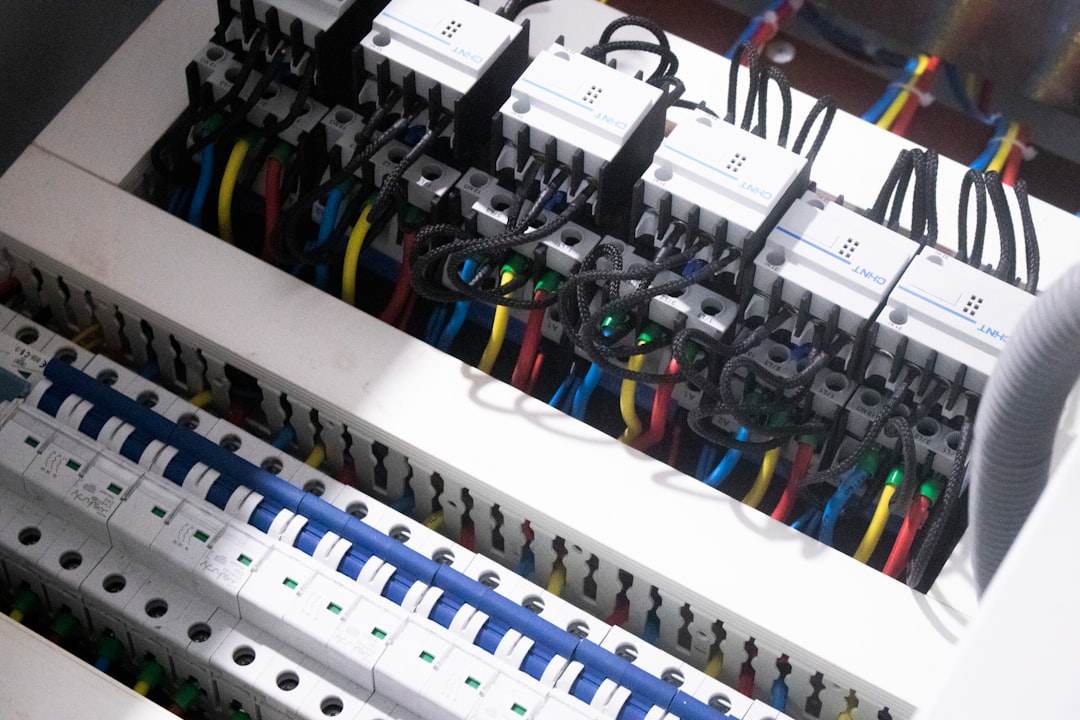
A miner that survives years of difficulty climbs can die in a single millisecond when a voltage spike rides in on the power line. ASICs are expensive, densely packed electronics, and a lightning-induced transient or a utility switching surge can fry a control board or a power supply instantly. Proper asic surge protection is a layered defense: a device at the service panel knocks down the big transients, and point-of-use protectors mop up what gets through. This guide explains where surges come from, how surge protective devices are rated, and how to build a tiered defense for one miner or a full rack. Panel-mounted devices and any in-wall work require a licensed electrician and must follow local code.
Where power surges come from
Two categories of surge threaten mining hardware, and they call for different defenses.
External transients originate outside the building. A nearby lightning strike couples thousands of volts onto the utility line even without a direct hit. Utility switching events, capacitor-bank operations, and grid faults send smaller but frequent spikes down the service drop. These are the high-energy events that destroy hardware outright.
Internal transients are generated inside the building by the loads themselves. When a large inductive load such as an air conditioner compressor or a pump switches off, the collapsing magnetic field produces a voltage spike on the shared wiring. In a mining setup, contactors, fans, and the miners’ own switching power supplies create a noisy electrical environment. Internal transients are lower energy but far more frequent, and their cumulative wear degrades electronics over time.
Both matter. A single lightning event can kill a fleet, but the daily grind of internal transients slowly shortens the life of every board on the circuit.
How surge protective devices are rated
Surge protective devices (SPDs) clamp voltage by diverting excess energy to ground once the line voltage exceeds a threshold. Three numbers describe how well one works.
Joule rating
The joule rating measures how much energy the device can absorb before it fails. Higher is better, but joules alone are misleading because the device sacrifices a little capacity with every event. A protector with a high joule rating lasts through more surges before it wears out.
Clamping voltage
The clamping voltage (or voltage protection rating) is the level at which the SPD starts diverting current. A lower clamping voltage means the device kicks in sooner and passes less of the spike to your hardware. For sensitive electronics, a lower clamping voltage is better.
Response time
Response time is how fast the device reacts. Faster is better, because a surge that arrives before the protector clamps still reaches your miner. Quality SPDs respond in nanoseconds.
An SPD also has a finite life. Metal-oxide varistors, the most common clamping element, degrade with each surge they absorb. A protector with an end-of-life indicator tells you when it has spent its capacity and become a passthrough wire. Replace it then; a worn protector offers no protection while looking identical to a working one.
Layered protection: panel to plug
No single device handles every threat. Surge protection works in tiers, each catching what the previous one missed.
Type 1 SPD installs at the service entrance, ahead of or at the main panel, and is built to absorb the largest external transients including lightning-induced surges. This is the first line of defense and the one that protects the whole installation.
Type 2 SPD installs at the distribution panel or sub-panel and handles residual transients that pass the Type 1 device, plus internally generated surges. For a dedicated mining sub-panel, a Type 2 device at that panel protects everything downstream. The wiring of these panel-mounted devices is electrician work; the sub-panel installation guide covers where a Type 2 SPD lands in the build.
Type 3 SPD is the point-of-use protector at the receptacle or PDU, the last layer before the miner itself. These have lower energy capacity but the lowest clamping voltage, cleaning up the small residual spikes that the upstream devices let through.
The tiers complement each other. The Type 1 device takes the catastrophic hit, the Type 2 device handles the moderate stuff, and the Type 3 device guards the final few feet. Skipping the panel-level devices and relying only on a power strip leaves the big transients unhandled.
Point-of-use protection for miners
Consumer surge strips are designed for desktops and televisions drawing a few hundred watts. A 240V miner drawing 3.5 kW will overload a standard strip and can melt one. Point-of-use protection for ASICs has to match the voltage and current of the circuit.
For 240V mining loads, the practical approach is an industrial PDU with built-in surge protection, rated for the circuit’s amperage and voltage. These distribute power to several miners while clamping transients at the rack. The PDU recommendations guide walks through how to pick one sized for your circuit and miner count. Whatever device you choose, confirm it is rated for the actual voltage and current, carries an end-of-life indicator, and is properly grounded, because an SPD diverts surge energy to ground and cannot work without a solid ground path.
A UPS adds a layer of conditioning and ride-through for brief sags, though most miners do not need full battery backup. The guide on when a UPS makes sense separates the cases where it earns its cost from the cases where it is overkill.
Protecting the network and data lines
Power is not the only entry point for a surge. Ethernet cabling runs between miners, switches, and routers, and a transient that reaches one device through the data line can damage everything connected to that network. A nearby strike can induce voltage on a long Ethernet run just as it does on power lines.
Network surge protectors install inline on Ethernet drops, particularly any run that leaves the building or spans a long distance between structures. For a setup where the router sits in the house and the miners live in a detached garage or shed, the Ethernet run between buildings is a prime candidate for a data-line protector. Keeping miners on a hardened, isolated network segment also limits the blast radius; the static IP and firewall configuration guide covers segmenting the mining network.
Why ASICs are especially vulnerable
Mining hardware sits at an unusual intersection of risk factors that makes surge protection more important than for ordinary household electronics.
Density and cost. A single Bitmain Antminer or Canaan Avalon packs a dense array of chips and a high-wattage power supply into one chassis, and a fleet multiplies that value many times over. A surge that would cost a few hundred dollars in a damaged television can take out thousands of dollars of mining hardware in one event, because the units are clustered on shared circuits and a transient on that circuit reaches all of them at once.
Continuous exposure. Most electronics spend much of their life switched off. Miners run every hour of every day, so they are connected and energized during every storm, every utility switching event, and every internal transient the building generates. The cumulative exposure is far higher than for an intermittently used device, and the wear from frequent small transients adds up.
Shared-circuit coupling. Several miners on one circuit, or one sub-panel, share a common electrical path. A transient entering that path is distributed across every connected unit, so a single unprotected entry point endangers the whole group. This is the argument for protecting at the panel level rather than trusting each unit to fend for itself.
The control board is the weak link. The most surge-sensitive part of an ASIC is the control board, the small computer that manages hashing. A transient that the power supply might shrug off can corrupt or kill the control board, taking the whole unit offline even though the hashboards and PSU survive. Replacing a control board is possible but costs time and parts; preventing the damage is cheaper.
None of this means a home miner in a low-risk area needs a five-figure protection scheme. It means the protection should be deliberate and matched to the value and exposure, rather than an afterthought bolted on after the first lightning season.
Grounding: the foundation surge protection depends on
A surge protective device works by diverting excess energy to ground, which means it cannot function without a solid, low-resistance ground path. An SPD on an ungrounded or poorly grounded circuit is decorative; it has nowhere to send the surge energy.
This makes grounding the prerequisite for every layer of surge protection. The equipment-grounding conductor must be continuous and correctly sized, the bonding must be intact from the receptacle through the PDU to the rack, and the service grounding electrode must be sound for the panel-level devices to work. The full grounding requirements are covered in the ASIC electrical grounding guide, and surge protection should be planned as the next layer on top of a verified ground, never as a substitute for one. If the grounding is in doubt, the surge plan is in doubt, because the two are the same physical system viewed from two angles. Verifying the ground path is therefore step one of any surge-protection install, and it is part of what a licensed electrician confirms when installing the panel-level SPDs.
Building a surge-protection plan for your setup
Match the investment to the exposure. A single home miner in an area with stable utility power and few storms needs less than a multi-unit setup in a lightning-prone region.
- Single home miner, low risk: a quality surge-rated PDU at the receptacle plus solid grounding covers most internal transients and modest external ones.
- Multi-unit home setup: add a Type 2 SPD at the sub-panel feeding the miners, with surge-rated PDUs at the rack.
- High lightning exposure or detached structure: a Type 1 SPD at the service entrance, a Type 2 at the distribution panel, Type 3 at the rack, plus data-line protection on any Ethernet run between buildings.
Document the joule ratings and install dates, and check the end-of-life indicators during routine maintenance. A protector that absorbed a major surge last spring may already be spent. Replacing a worn SPD costs far less than the hardware it guards. The panel-level devices in any of these plans must be installed by a licensed electrician to code; the point-of-use PDUs are the part an operator can manage directly.
References
- Electricity explained: delivery and reliability — U.S. Energy Information Administration
- Antminer power supply specifications — Bitmain
- Avalon miner electrical specifications — Canaan
Can a regular power strip protect my ASIC miner from surges?
What is the difference between a Type 1 and Type 2 surge protector?
How often should surge protective devices be replaced?
Surge protection guards the hardware you have already bought. When you are ready to add to the fleet, the Coin Web Mining shop lists current models and lead times, with escrow available on first orders.