
Bitmain Antminer S21 XP: What Miners Should Know
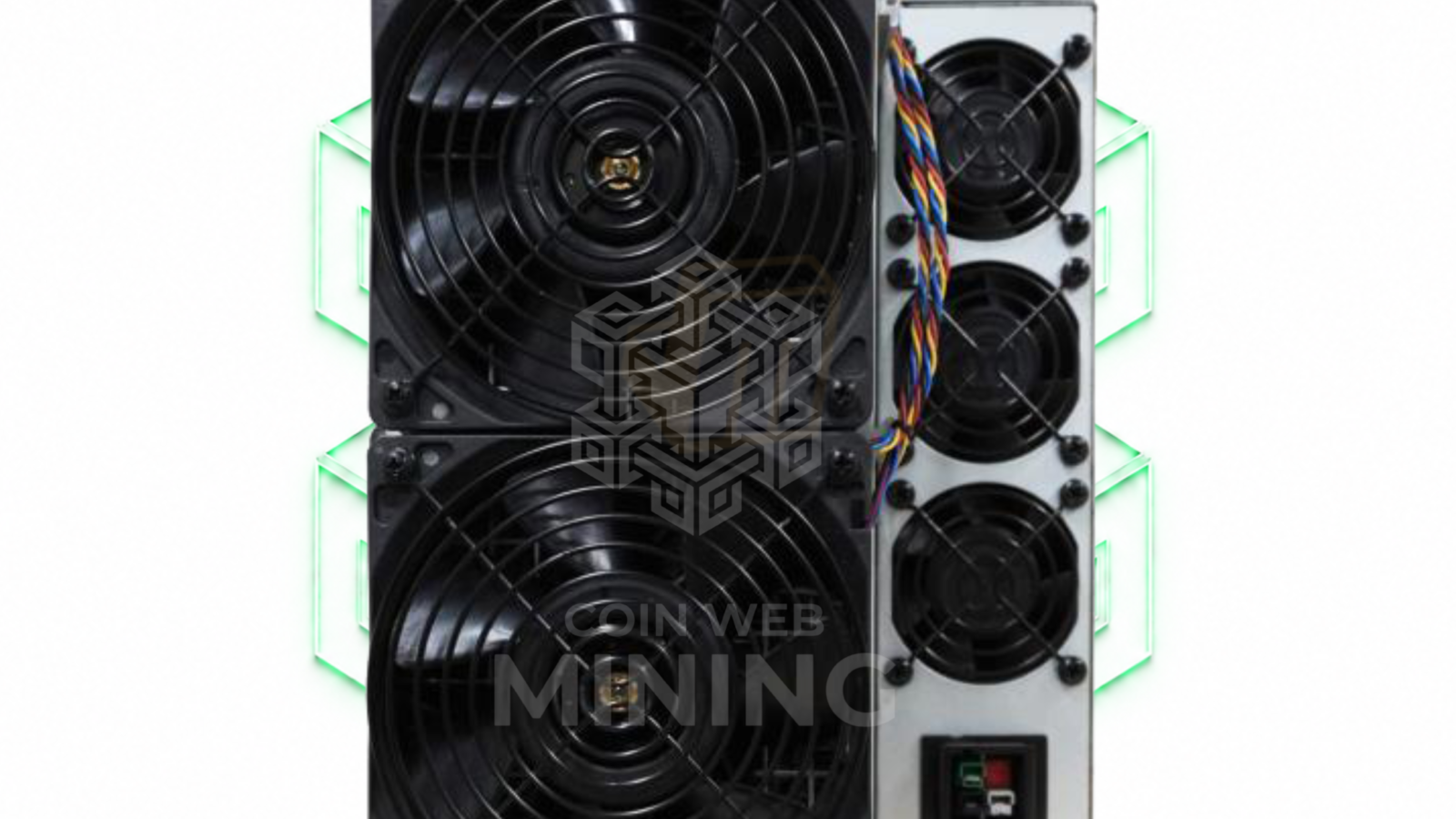
The bitmain antminer s21 xp is the efficiency leader among Bitmain’s air-cooled Bitcoin miners, the unit most home and small-facility operators benchmark against when sizing a current-generation purchase. Its appeal is straightforward: at roughly 13.5 J/TH it mines more BTC per dollar of electricity than nearly anything else that runs on a standard mining shelf. Coin Web Mining is an independent reseller and carries the S21 XP as current-generation stock at a thin margin over distributor cost — not as an authorized Bitmain partner. This guide explains the specs, how the XP compares to the rest of the S21 family, and who benefits most. Spec figures cite Bitmain’s published sheet; confirm current numbers before buying.
What is the Antminer S21 XP?
The S21 XP is an air-cooled SHA-256 Bitcoin miner and the highest-efficiency variant in the S21 air lineup. Per Bitmain’s specifications, it delivers around 270 TH/s at roughly 3,645 watts, for an efficiency near 13.5 J/TH. That efficiency is the headline: it is well under half the joules-per-terahash of an S19-era unit and ahead of the base S21 and S21++, which is why the XP commands a price premium and holds value better over time.
It mines on SHA-256, the standard Bitcoin algorithm, and works with every major pool. It drops into a standard mining shelf on a 200–240V circuit — no water loop, no special infrastructure — which makes it the practical efficiency ceiling for buyers who do not operate at hydro scale. For a home or small-shop miner, that combination of front-of-market efficiency and simple deployment is precisely what makes the XP the default recommendation.
Efficiency is the metric that matters most as the Bitcoin network matures. Every difficulty increase erodes the earnings of less efficient hardware first, so a unit at 13.5 J/TH stays profitable longer than one at 20 or 30 J/TH on the same power rate. Buying efficiency is, in effect, buying a longer profitable life and stronger resale value down the road.
S21 XP specs and what they mean
Three numbers define the unit: hashrate (about 270 TH/s), wall power (about 3,645 watts), and efficiency (near 13.5 J/TH). The efficiency figure is the one that compounds. Lower J/TH means a smaller electricity bill for the same hashrate, and over a multi-year hold that gap dwarfs the difference in purchase price between variants. The deeper math is in our breakdown of S21 efficiency in joules per terahash.
Wall power matters for circuit sizing. At about 3,645 watts on 240V, the unit draws roughly 15 amps; with the 80% continuous-load rule, that points to a dedicated 20-amp circuit per unit as a safe minimum. Power and circuit details are covered in our guide to S21 power consumption. The “wall power” figure includes power-supply losses, so it is the number a breaker and meter actually see — the right figure to plan electrical work around.
To put the efficiency in money terms: at 3,645 watts the XP consumes about 87.5 kWh per day, or roughly $8.75 daily at $0.10/kWh. A base S19 producing similar hashrate would burn far more for the same output, and that daily gap, compounded over years, is the entire case for the XP’s premium.
S21 XP vs base S21 and S21++
The base S21 is the lowest-cost entry to the family; the S21++ sits between base and XP on efficiency; the XP leads. The XP’s higher price is recovered through lower electricity cost per coin over time, which favors operators with expensive power or long holds. Buyers minimizing upfront spend often choose the base S21. Our comparison of the S21 variants lays out the trade-offs side by side. The right pick is not universal — it depends on the buyer’s power rate and how long they plan to run the unit.
A simple rule of thumb helps. If electricity is cheap and the plan is to mine for only a year or so, the base S21’s lower purchase price often wins because there is little time for the efficiency premium to pay back. If electricity is expensive or the plan is a long, continuous hold, the XP’s lower running cost compounds in its favor and usually justifies the premium. The S21++ is the middle-ground hedge for buyers who want better efficiency than the base unit without the XP’s full price. Mapping the choice to the buyer’s actual power rate and time horizon turns what looks like a confusing lineup into a fairly clear decision.
Who should buy the S21 XP?
The XP suits buyers who plan to run continuously and care about lifetime cost more than upfront price — anyone on standard or expensive power, and anyone holding for two years or more. Its efficiency edge means it stays profitable longer as network difficulty rises, and its strong resale value softens the eventual upgrade. Home miners with a single unit and small-shop operators with a handful are the core audience, since it needs no hydro infrastructure.
Buyers optimizing purely for the lowest possible upfront cost, or those building a hydro facility, have other options — the base S21 for cheapest entry, the hydro and immersion variants for scale. For most current-generation air buyers, though, the XP is the default recommendation. The decision usually comes down to a simple question: will the unit run long enough and on expensive enough power for the efficiency premium to pay back? For most continuous miners on grid power, the answer is yes.
Cooling, noise, and where to run it
The S21 XP is air-cooled, which keeps deployment simple but carries practical consequences a buyer should plan for. The unit’s fans move a large volume of air to keep the chips within their thermal limits, and that produces real noise — on the order of a loud appliance running continuously. Running one in a living space is generally impractical; a garage, basement, dedicated shed, or hosted facility is the realistic home for it. Intake air temperature also matters: the cooler and cleaner the air the unit draws, the closer it runs to its rated efficiency, while hot or dusty intake forces fans to work harder and can push the chips toward throttling.
Ambient conditions in Southeast Asia and other warm climates are worth a specific mention, since high year-round temperatures and humidity raise the cooling burden on any air-cooled miner. Operators in those regions often run the unit in a ventilated, shaded space with good airflow, and some add intake filtration to keep dust off the heatsinks. None of this is unique to the XP, but the unit’s high power density makes good airflow planning more important than it would be for a smaller miner.
Heat output is the flip side of power draw: nearly all of the roughly 3,645 watts a unit consumes is released as heat. In cold climates that heat can be put to use warming a workshop or outbuilding, partially offsetting the energy cost. In warm climates it is purely a load to manage. Either way, a buyer should plan where that heat goes before the unit is running, not after.
How to decide and where it fits in the lineup
Run the break-even on conservative assumptions: current network difficulty, your real electricity rate, and a flat-to-lower BTC price rather than an optimistic forecast. If the XP clears break-even comfortably at your power cost, its efficiency makes it the safer long-term hold; if margins are thin even on the most efficient unit, the issue is power cost, not hardware — and no machine will fix an expensive electricity contract. Our guide to Bitcoin mining difficulty explains how that variable moves, and the Bitmain Antminer catalog maps the XP against the rest of the current range.
Before buying, confirm voltage compatibility (the XP expects 200–240V), plan a dedicated circuit per unit, and budget for the electricity cost over the full intended hold rather than just the purchase. Factoring in expected depreciation keeps the model honest, since the unit will be worth less in two years as newer hardware arrives. One more advantage worth weighing is resale value. Because efficiency is what the secondary market prizes as difficulty rises, the S21 XP holds its value better than less efficient units, which softens the cost of the eventual upgrade and partially offsets its higher purchase price. A buyer who plans to refresh hardware every couple of years recovers more of the XP’s cost on resale than they would from a base unit, narrowing the effective price gap between the two over the long run. Combined with its lower running cost, that residual value is why the XP tends to be the soundest long-term choice for continuous miners on grid power. As an independent reseller, Coin Web Mining quotes the S21 XP at 1–3% over distributor cost with escrow on first orders, and buyers can request a quote on current stock and confirmed lead times.
References
- Antminer S21 XP specifications — Bitmain
- S21 XP hashrate, power, and efficiency listing — ASIC Miner Value
- Live Bitcoin network difficulty and hashrate — mempool.space
- SHA-256 ASIC efficiency and hashprice analysis — Hashrate Index
What is the Antminer S21 XP hashrate and efficiency?
Is the S21 XP worth the premium over the base S21?
What circuit does the Antminer S21 XP need?