
Beginner’s Guide to Bitcoin Mining
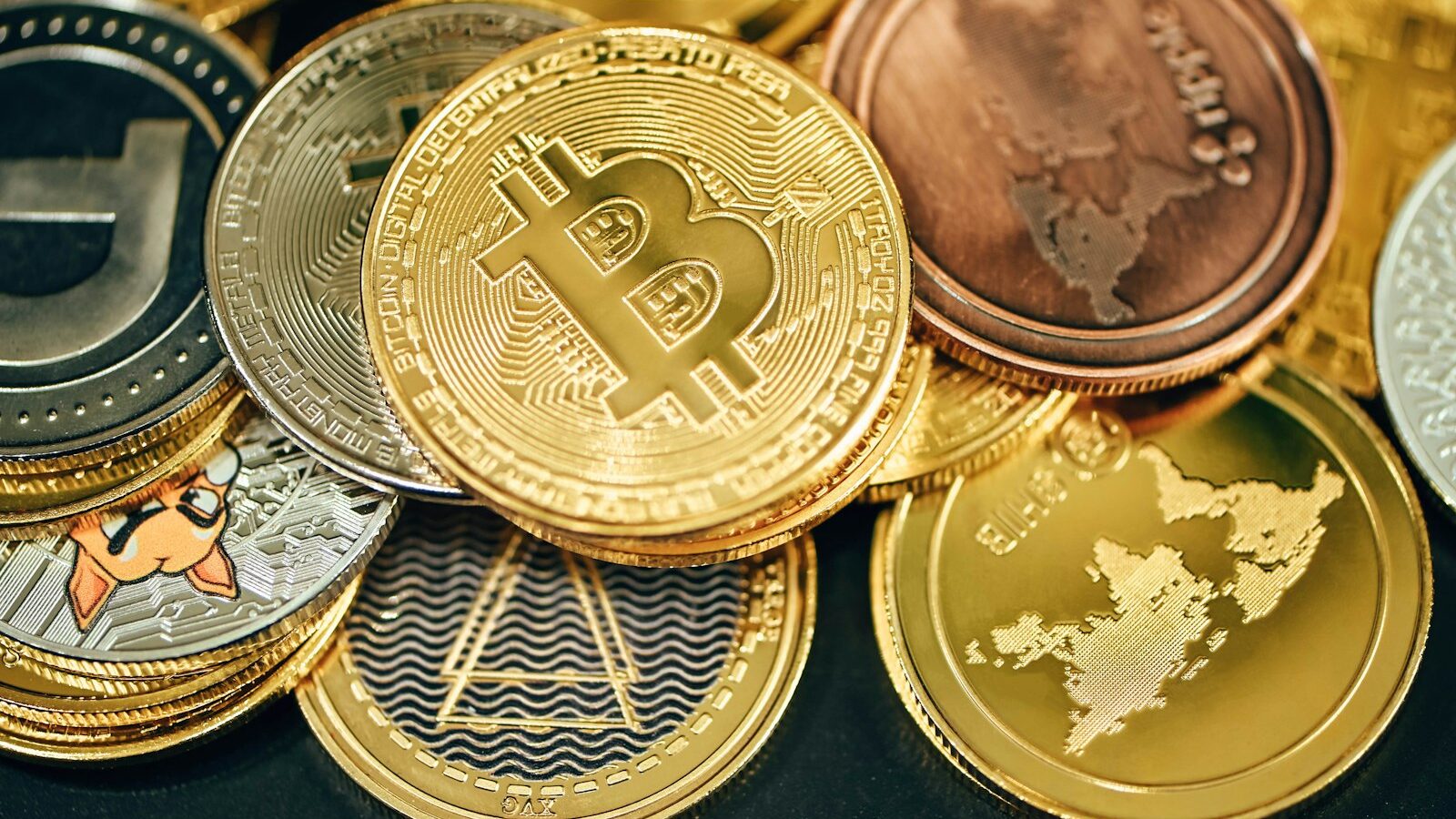
Bitcoin mining is the process of running specialised computers that secure the Bitcoin network and, in return, earn newly-issued bitcoin. This guide explains how it actually works, what hardware does the work, and what realistic returns look like in 2026.
What mining actually does
Every ten minutes (on average), a new block of Bitcoin transactions is added to the chain. To decide which miner gets to add the next block — and collect the block reward of newly-minted BTC plus transaction fees — the network runs a competition. Each miner tries to find a number (a “nonce”) that, when combined with the block’s data and run through the SHA-256 hash function, produces a result below a target threshold.
The only known way to find this number is brute force: try trillions of nonces per second until one works. The miner that finds a valid nonce first publishes the block, collects the reward, and the race resets.
That’s the entire mechanism. Mining is not “solving complex math problems” in the colloquial sense — it’s running an enormous lottery whose tickets are hashes, and where the rate at which you can buy tickets (your hash rate) determines your share of the rewards.
Why hardware matters more than software
Because the lottery is brute-force, faster hardware wins. A standard CPU produces around 100 million hashes per second (100 MH/s). A modern Bitcoin ASIC produces 200 trillion (200 TH/s) — two million times faster. There is no software trick that closes that gap.
This is why nobody mines Bitcoin on phones, laptops, or browsers anymore. The economics demand purpose-built hardware that does only this one thing. The current state of the art:
- Hash rate: 150–500 TH/s per unit (top-tier 2025 models).
- Power consumption: 2,500–5,500 W per unit. A miner uses roughly the same power as a small electric oven, continuously, 24/7.
- Efficiency: 12–25 J/TH for current models. Older miners (S9-era, ~98 J/TH) are mostly uneconomical except in regions with very cheap or free power.
Pools vs solo mining
Solo mining a single ASIC against the global network gives you a roughly 0.0001% share of total hash rate. At that scale you might find a block every few decades — or never. The variance is brutal.
Mining pools solve this by combining the hash rate of thousands of miners into a single entry in the lottery. When the pool wins a block, the reward is distributed to participants in proportion to their contributed hash rate, minus a small pool fee (typically 1–2%).
For practical purposes, a single rig means joining a pool. The major Bitcoin pools as of 2026: Foundry USA, AntPool, F2Pool, ViaBTC, and Braiins. Pool selection mostly comes down to fee structure (PPS vs FPPS vs PPLNS), payout threshold, and geographic latency. Differences are small; pick a reputable one and don’t overthink it.
The cost stack
Before you put any money down, the cost picture for a single modern ASIC looks like this:
| Cost component | Typical range (1 unit, 12 months) |
|---|---|
| Equipment (Antminer S21 XP or equivalent) | $3,500–$5,500 |
| Electricity (3.5 kW × 24 × 365 × $/kWh) | $1,200–$6,100 |
| Cooling / ventilation upgrades | $200–$1,500 |
| Pool fees (~1.5% of revenue) | $30–$80 |
| Hosting (if applicable) | $0–$1,200 |
The electricity range is the dominant variable. A miner running on $0.04/kWh power costs about $1,200/year to operate; the same miner on $0.20/kWh costs $6,100/year. Same hardware, same hash rate — completely different business.
Realistic returns
Use our per-miner profitability calculator with your actual electricity rate before committing. As a rough 2026 baseline, an Antminer S21 XP (270 TH/s) generates around:
- $8–10/day gross revenue (varies with BTC price and network difficulty)
- $2–3/day electricity cost at $0.04/kWh ($8–10 at $0.12/kWh)
- Therefore $5–7/day net at low-cost power; close to break-even or negative at high-cost power
Payback periods at low-cost power: 12–18 months. At median residential power (~$0.15/kWh in many countries), payback may exceed the rig’s useful lifetime — meaning you lose money.
The next Bitcoin halving is in 2028. When the block reward halves again, only the most efficient hardware on the cheapest power survives. Plan accordingly.
Common mistakes
- Buying without checking your power rate. The rig is cheap; the electricity is the business. Get a residential or commercial power audit before ordering anything.
- Ignoring noise. A single Antminer at full load runs at 75–80 dB — louder than a vacuum cleaner. It cannot live in a bedroom, a garage attached to a bedroom, or a quiet residential neighbourhood without acoustic treatment.
- Underestimating heat. 3.5 kW of continuous heat output is significant. In a small enclosed space, you’re heating the room by 5–10°C above ambient. Plan ventilation or hosting.
- Buying refurbished without warranty. ASIC failure rates are non-trivial — fan failures, hashboard issues, PSU degradation. A used rig with no warranty is a coin flip.
- Falling for “cloud mining” contracts. Most are unprofitable for the buyer by design. If you can’t physically locate the rig you’re paying for, walk away.
Next steps
- Read How to Choose Your First Miner for a model-by-model decision tree.
- Read Home Mining vs Hosted Mining to decide where the rig will live.
- Read Total Cost of Ownership for the full financial picture.
- Browse the current catalogue when you’re ready to compare specific units.